01
What Causes Power to Some Rooms But Not Others?
loose neutralsplit bus paneltripped breaker
A partial outage almost always traces back to one of three points in your home's electrical system.
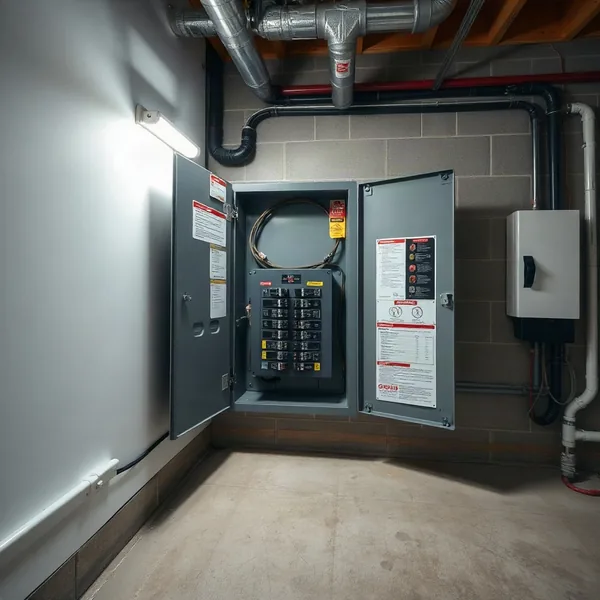
A tripped breaker is the most common culprit — each breaker controls a specific circuit, so one trip blacks out only those outlets and fixtures. A loose neutral wire is more serious: when the neutral conductor loses a solid connection at the panel or a junction box, voltage becomes unbalanced and some circuits dim or go dead while others stay live. Homes with a split bus panel — a design used widely before the 1980s and still present in a large share of Yakima's older housing stock — face an added complication, because one fault in the upper bus can knock out multiple circuits at once.
02
Is a Partial Power Outage Dangerous?
loose connectionarcingfire risk
A tripped breaker on its own is a normal protective response and carries low immediate risk.
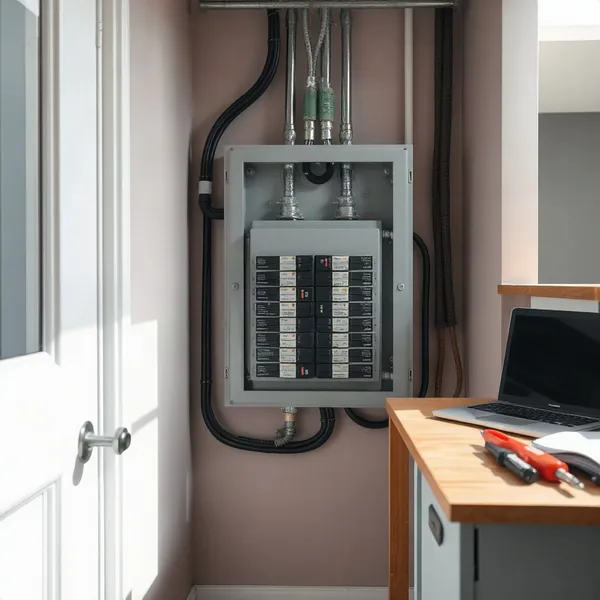
A loose connection is a different matter entirely. When a wire works loose at a terminal, arcing can occur — small electrical sparks that heat the surrounding insulation and nearby wood framing. That fire risk is real and has caused house fires in homes across the Pacific Northwest. Warning signs include a burning smell near your panel, outlets warm to the touch, or breakers that trip repeatedly without an obvious overload. Yakima's pre-1980 housing stock carries elevated exposure here because aluminum branch-circuit wiring — common in homes built between 1965 and 1973 — is especially prone to loosening at connection points over decades of thermal cycling.
03
Partial Outage vs Full Outage: What's the Difference?
utility outagehome wiring fault
The geography of what's dead tells you a lot.
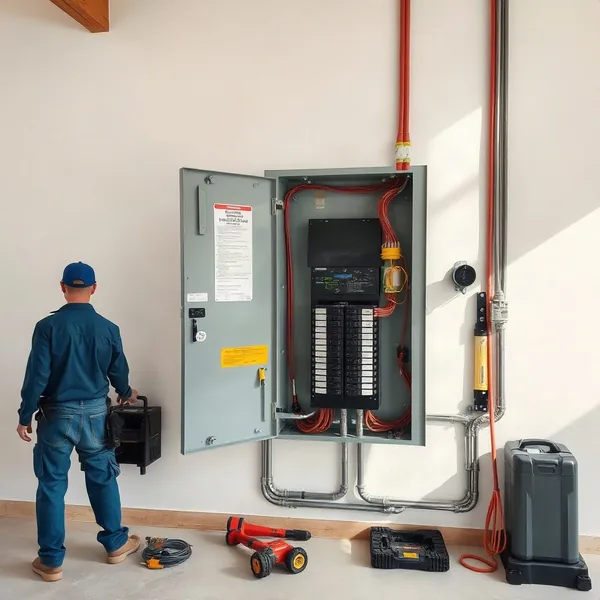
A partial outage — some rooms functioning, others not — almost always points to a home wiring fault on your side of the meter: a failed breaker, a loose connection, or a panel problem. A full outage where every circuit in the house is dead simultaneously could still be a home wiring fault, such as a failed main breaker or a problem at the service entrance. But a full outage also suggests a possible utility outage affecting your street or neighborhood.
04
Checking for a Utility Issue vs a Home Wiring Problem in Yakima
utility companyservice drop
Start outside before you open the breaker panel.
Look at your neighbors — if streetlights are out or several houses on your block are dark, there's a strong chance the fault is with the utility company rather than your wiring. Pacific Power serves residential customers throughout Yakima County; their outage map at pacificpower.net updates in near real time. If your neighbors have power and you don't, look at the service drop — the overhead wires running from the utility pole to your home's weatherhead. A damaged or partially disconnected service drop can cause exactly the same symptoms as an internal panel fault: some circuits live, others dead. Service drop repairs are Pacific Power's jurisdiction up to the weatherhead; anything past it is yours.
05
What to Check Before You Call an Electrician
breaker panelGFCI reset
Run through this checklist in order to avoid a preventable service call.
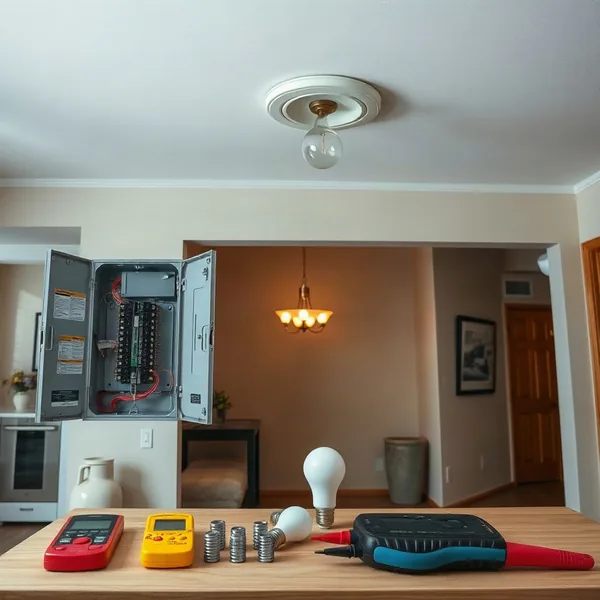
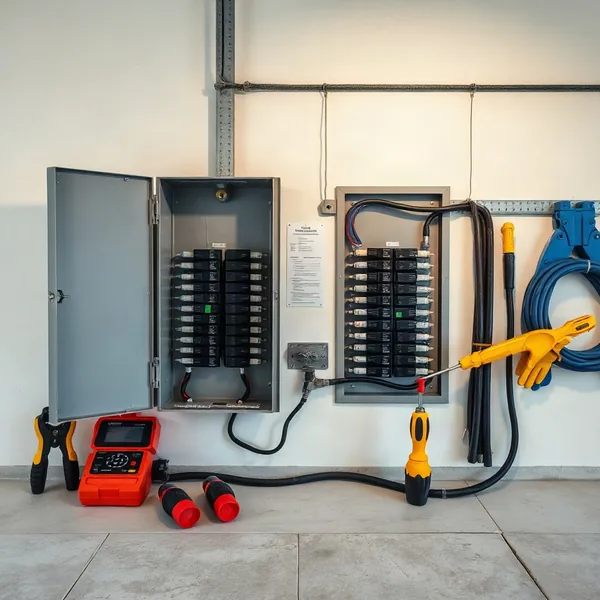
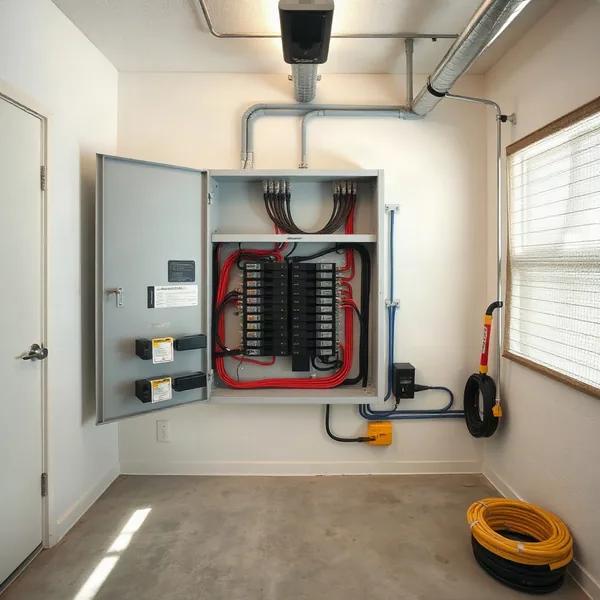
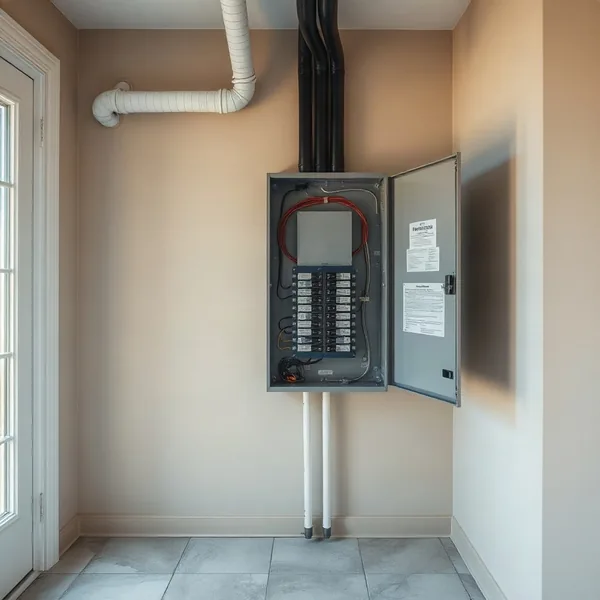
First, visit your breaker panel and look for any switch sitting in the middle position — that's a tripped breaker. Push it fully off, then firmly back on. Second, locate every GFCI reset button in your home; a single tripped GFCI in a garage or bathroom can cut power to six or more downstream outlets on the same circuit. Press the RESET button until it clicks. Third, check Pacific Power's outage map for your area of Yakima County. If all breakers look on, all GFCIs are reset, and your neighbors have power, the fault is internal and likely involves a loose connection, a failing breaker, or an aging panel — time to call a licensed electrician.